Tips For Superiors
Saintly Children
Manuel Foderà, born in Calatafimi, Sicily (21 June 2001 – 20 July 2010), died at nine from Neuroblastoma, an aggressive cancer, after a five-year struggle involving surgeries, thirty chemotherapy cycles, a transplant, and blood transfusions. Manuel offered his suffering for the conversion of sinners and the sanctification of priests. Now a Servant of God, his cause for beatification has been introduced. One day, after receiving communion, he asked Jesus what he could offer Him as a Christmas gift. Jesus replied: “Always show my joy to others. Be a warrior of light in the midst of darkness.”
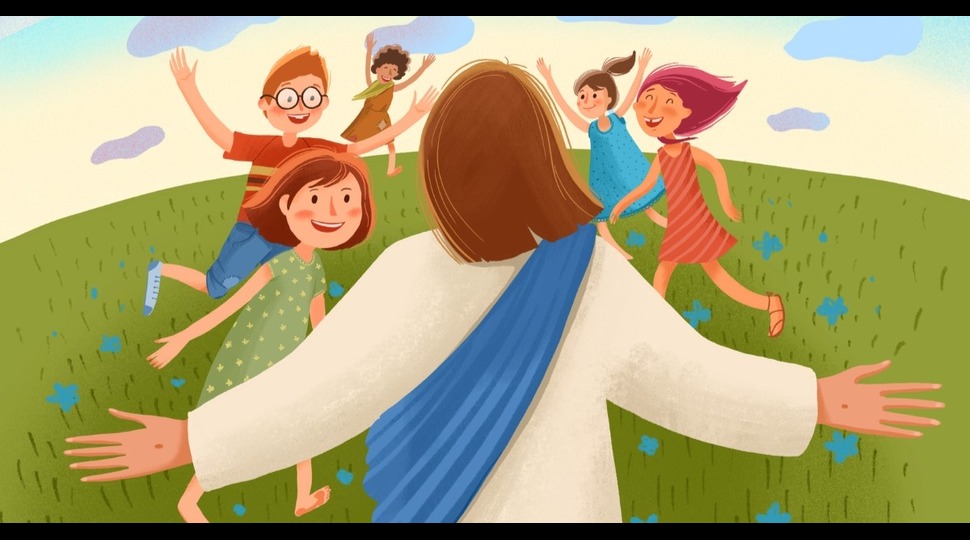
Jesus welcomed children and affirmed their place in the kingdom: “Let the children come to me and do not hinder them, for to such belongs the kingdom of heaven” (Mt 19:14). He also set them as models: “Truly, I say to you, unless you turn and become like children, you will never enter the kingdom of heaven” (Mt 18:3). These words reveal that children are open to grace and can be holy.
Research and work with children by Maria Montessori, a physician and psychiatrist (the one who developed the Montessori Method), Sofia Cavalletti and others have shown that children, as young as three years old, have a sense of God and can relate to Him in their own way.
Vatican II says that “children should be taught from their early years to have a knowledge of God according to the faith received in Baptism, to worship Him, and to love their neighbour” (Gravissimum Educationis, n. 3).
What is being proposed here is that we should facilitate children's growth in their relationship with God and help them become holy, like the Servant of God Manuel Foderà and Carlo Acutis.
Moved by their example, let us consider how we might actively guide children along the same path of joyful holiness.
- Make an Explicit Proposal of Sanctity: Don Bosco used to tell the children and young people under his care: “God wants all of us to be saved; in fact, it is his will that all of us become saints.” We must not presume that children will “pick up” the ideal of sanctity when we teach Catechism or narrate some edifying stories. Like Don Bosco, we should speak clearly of holiness, tell them that they are called to be saints, and present this call as joyful and attainable. Notice the explicit invitation of Jesus to Manuel: “Always show my joy to others. Be a warrior of light in the midst of darkness.” Children respond generously when trusted with great ideals.
- Accompany Children’s Spiritual Experiences: Children have authentic spiritual desires and longings. These must be listened to with reverence and encouraged with discernment. After reading the article on children’s holiness in last month’s MAGNET, a junior sister wrote: “It sparked a personal reflection in me; I remembered how much I wanted to be a saint as a child and thought becoming a nun was the answer. As I grew, that desire faded, and your piece made me stop and ask myself why.”
Many children harbour the desire to become saints. This reveals the action of grace in a receptive heart. Often, such desires fade because there is no one to help them nourish it. Our task is to guide, purify, and deepen these desires.
- Facilitate Encountering Jesus through the Word of God: Children are able to discover and experience the great truths of our faith, like God’s love, God’s mercy, and Jesus’ sacrifice, by engaging directly with the Bible. The method for doing this is quite simple: one reads the biblical text and then gives the children time to assimilate it through silence, well-chosen activities, and sharing. Experience with children shows that those between three and six years of age are able to engage very fruitfully with the parable of the Good Shepherd, while those between six and nine years find the parable of the vine and the branches very attractive. It is amazing to notice the depth of the relationship that little children establish with Jesus through the parables. Four-year-old Elizabeth says that the Shepherd “would take the sheep out to see the bright stars at night.” According to three-and-a-half-year-old Daniel, the Shepherd “would take them to a good hill and let them roll down it.” As per four-year-old Andrew, if we are lost, the Shepherd’s response to finding us would be to “give us a big smile” rather than scold us.
- Teach Love for the Eucharist. When, in 1910, Pope Pius X allowed children to receive Communion from the age of seven, he reportedly said that because of it, “there will be saints among the children.” One of the favourite sayings of Carlo Acutis was: “The Eucharist is my highway to heaven.”
One year before Our Lady appeared to the children at Fatima, an angel appeared to them three times. Lucy (9) had already received First Communion; Francis (8) and Jacinta (6) had not. In the third apparition (autumn 1916), the angel appeared with a Host from which blood droplets fell into a chalice. He gave the Sacred Host to Lucy and the Precious Blood to Francis and Jacinta, though they had not yet received First Communion. He also taught them this prayer, which they recited three times before and after Communion:
“Most Holy Trinity, Father, Son and Holy Spirit. I offer You the most precious Body, Blood, Soul and Divinity of Jesus Christ, present in all the Tabernacles of the world, in reparation for the outrages, sacrileges and indifference with which He Himself is offended. And through the infinite merits of His most Sacred Heart and Immaculate Heart of Mary, I beg of You the conversion of poor sinners.”
Frequent, well-prepared Communion and Eucharistic adoration — adapted to children’s capacity — remain powerful paths to holiness.
- Encourage Age-Appropriate Penance: At the first apparition of Our Lady at Fatima (13 May 1917), she asked Francis, Jacinta, and Lucy if they were willing to do penance in reparation for sins. When they agreed, she told them they would suffer, but God would be their comfort. They responded to her request with some sacrifices: giving their lunch to poor children, foregoing water when thirsty, and wearing a rough rope around their bodies day and night. At the apparition of 13 September 1917, Our Lady said God was pleased with their sacrifices but instructed them to wear the rope only during the day.
Their example shows that penance, when wisely guided and moderated, is within children’s capacity. United to Christ’s Paschal Mystery (cf. 1 Pt 2:24), even small sacrifices have redemptive value.
- Provide Age-Appropriate Spiritual Materials: Carlo Acutis was taught the rudiments of faith by his nanny, Beata, a Polish girl whom the family hired to look after him when he was three years old. Beata came for the first day of work with “a bag full of holy cards.” Among the cards Carlo liked best were the images of Our Lady. Books, images, music, creative materials, and digital resources leave deep impressions on young hearts. Well-chosen and creatively used, they can nurture imagination and lead children towards God.
- Make Children Protagonists: When Our Lady appeared at Fatima, she asked the children whether they were willing to suffer. So, children are to be active participants and not merely passive beneficiaries of their spiritual growth. They are not to be ordered what to do or how to do, but their participation in the process suggested to them is to be elicited, and their voices heard. When given the opportunity, they will use their creativity to develop their own explanations and insights.
- Encourage Children to be Apostles of Charity and Holiness: The Synod on Synodality exhorts: “The Church cannot be synodal without the contribution of children, who are bearers of missionary potential, being valued. The voice of the child is needed by the community” (“Final Document,” n. 61). Children are to be encouraged to reach out to others in all the ways they can. Carlos Acutis used to sell his toys to collect money for the poor. Jesus tells Manuel Foderà to be a messenger of joy and a “warrior of light.”
- Present Holiness as True Joy: Dominic Savio used to say that “holiness consists in being happy.” Help children to realize that when we love and serve the Lord, avoiding sin we become truly happy (Ps 100:2).
- Instil Devotion to Mary. Pope Francis teaches us: “Mary is the saint among the saints… She teaches us the way of holiness and she walks ever at our side… Our converse with her consoles, frees and sanctifies us.” (Gaudete et Exsultate, n.176). Teach children to love Mary.
Let us accompany children, walking with them, towards the joy of holiness.
Blurbs
“Children, who have no problem in understanding God, have much to teach us….” -- Pope Francis
Children have authentic spiritual desires and longings. These must be listened to with reverence and encouraged with discernment.
Frequent, well-prepared Communion and Eucharistic adoration — adapted to children’s capacity — remain powerful paths to holiness.