Editorial
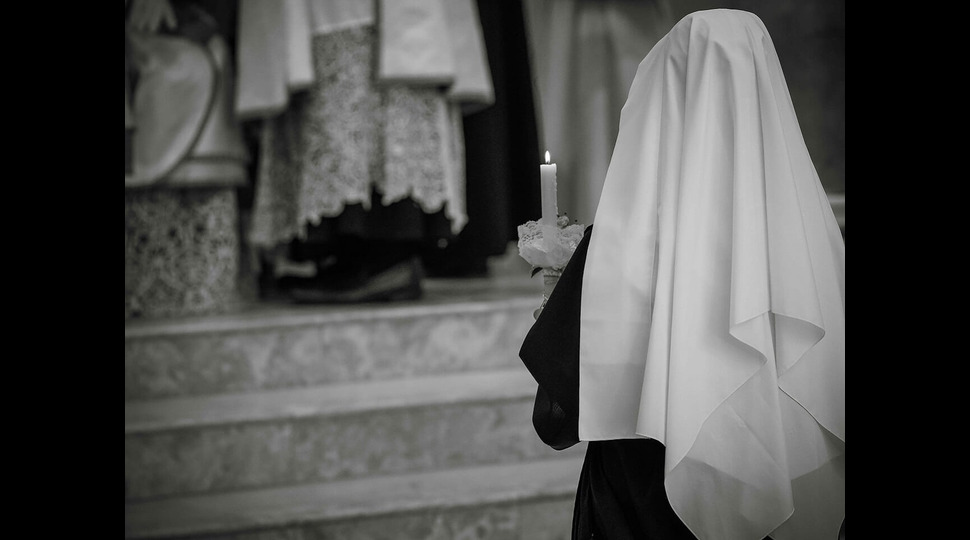
Vocations at a Crossroads
The Church has always insisted on a simple, disarming truth: vocation begins in God. It is not engineered, not manufactured, not the outcome of clever pastoral planning. It is a gift. The words of the prophet Jeremiah -- “I will give you shepherds after my own heart” (Jer 3:15) --continue to echo through the Church’s understanding, reaffirmed in Pastores Dabo Vobis, where St. John Paul II describes the priestly vocation as a grace given both to the individual and to the entire community. Pope Francis, in his reflection for the World Day of Prayer for Vocations, deepened this insight: a vocation is “a precious gift that God sows in our heart,” one that grows only in receptive and faithful soil.
And that is where the question sharpens for India today: what is happening to the soil?
For decades, India has been one of the most fertile grounds for vocations to priesthood and religious life. From the deeply rooted Christian traditions of South India to the missionary dynamism of the North and Northeast and the prophetic witness among Dalit, Tribal and marginalised communities, the Church in India has been sustained by a steady, generous stream of young men and women offering their lives in service. Families nurtured faith. Parishes accompanied discernment. Religious congregations embodied purpose. The ecosystem worked—quietly, effectively.
Today, that ecosystem is under visible strain.
The decline is not always dramatic. In many places, it is subtle -- fewer entrants each year, a novitiate smaller than before, a seminary that feels less full. But the pattern is unmistakable. Vocations are no longer assumed; they must be consciously fostered in a context that is far more complex than before.
Several forces converge here. The transformation of the Indian family is one of the most significant. Smaller families, increased mobility, and economic pressures have reshaped parental expectations. Parents are not hostile to vocation, but they are cautious. Their hesitation is not rooted in lack of faith, but in lived realities.
At the same time, the aspirations of young people have shifted dramatically. Opportunities in education, technology, business, and global employment have expanded horizons. Success is visible, measurable, and immediate. Religious life, by contrast, appears hidden, countercultural, and demanding. The vows of poverty, chastity, and obedience stand in sharp contrast to a culture that increasingly values autonomy, consumption, and personal choice.
The cultural climate reinforces this tension. Globalisation and digital media have not only opened doors but also reshaped imaginations. Identity is curated. Freedom is equated with options. Commitment, especially lifelong commitment, is often viewed with suspicion.
Stay open. Stay flexible. Don’t lock yourself in.
That is the dominant narrative young people breathe.
Yet, beneath this surface, the story is not one of simple decline.
India remains deeply spiritual. Faith continues to animate daily life in countless homes and communities. Pilgrimages draw crowds. Devotions endure. Service initiatives flourish. Young people, even when distanced from institutional structures, continue to search for meaning, for belonging, for a purpose that transcends the transactional.
The hunger has not disappeared. It has become more discerning.
This is where the Church must examine not only external challenges but also its own approach. Too often, vocation promotion risks being reduced to recruitment strategies—campaigns, posters, and appeals aimed at increasing numbers. While these have their place, they cannot substitute for the deeper work of accompaniment and witness. Young people today are acutely sensitive to authenticity. They can distinguish between invitation and pressure, between a genuine call and institutional urgency.
And when they sense pressure, they withdraw.
The Second Vatican Council anticipated this long ago. Optatam Totius placed the responsibility of fostering vocations on the entire Christian community, emphasising that it is above all through a fully Christian life that vocations are nurtured. Lumen Gentium presents religious life not as an escape from the world but as a radical intensification of baptismal consecration—a visible sign of the Kingdom. This vision was deepened in Perfectae Caritatis, which called religious institutes to constant renewal—returning to the Gospel while reading the signs of the times.
That renewal remains unfinished.
St. Paul VI, in Evangelica Testificatio, reminded religious that their witness must be both contemplative and prophetic, rooted in God yet visibly relevant to the world. Later, St. John Paul II’s Vita Consecrata would bring these strands together, presenting consecrated life as a “living memory of the way of being and acting of Jesus.” It is not an optional extra in the Church, but central to her identity—a sign of the Kingdom already present, yet to come.
In other words, the most effective vocation promotion is not a programme. It is a life.
Where priests and religious are seen as joyful, accessible, and grounded in prayer, vocations continue to emerge. Where they appear overburdened, distant, or internally divided, the appeal weakens. This is not about perfection; it is about credibility. Young people do not expect flawlessness, but they do look for coherence.
They watch. They listen. They decide.
The credibility challenge is compounded by broader crises. Reports of clerical abuse worldwide and local instances of misconduct, even if limited, have eroded trust. In a media-saturated environment, such narratives travel fast and linger long. For young people seeking ideals worth committing to, any perceived gap between proclamation and practice becomes a serious obstacle.
There is also the delicate question of discernment itself. In a context where numbers have historically been strong, the temptation can be to prioritise quantity over depth. But the current moment demands the opposite. Careful accompaniment, psychological screening, and a genuine freedom to choose—or to step away—are essential to ensuring that those who enter formation are both called and prepared.
Quality over quantity. Depth over display. Discernment over drive.
This shift is not a retreat; it is a maturation.
At the same time, the Church’s expectations of those discerning vocation remain clear—and demanding in the best sense. Priesthood and religious life require total self-gift. Celibacy is not merely a discipline but a sign of undivided love. Poverty is not deprivation but freedom from attachment. Obedience is not submission but attentive listening to God’s will as mediated through community and mission. Vita Consecrata insists that these evangelical counsels are not burdens imposed from outside but paths that configure a person more closely to Christ.
The language used to communicate this call is crucial. If vocation is presented primarily in terms of sacrifice, it risks appearing burdensome. If it is framed as an escape from worldly failure, it loses credibility. But when it is articulated as a path of deep joy, meaningful service, and radical love—as recent papal teaching consistently emphasises—it regains its attractiveness.
The task, then, is not to dilute the call but to illuminate it.
Practically, this calls for a renewed, multi-layered approach. Prayer must reclaim its central place—not as a routine observance but as a sustained culture. The World Day of Prayer for Vocations should not remain a symbolic event; it should inspire ongoing parish and family initiatives that keep the question of vocation alive.
Families, as the “domestic church,” require particular attention. Formation programmes for parents—through parish gatherings and retreats—can help reframe vocation not as a loss but as a shared discernment of God’s will. The witness of parents who joyfully support a child’s vocation remains one of the most powerful influences.
Parishes and educational institutions must move beyond occasional awareness campaigns to sustained accompaniment. Youth groups, vocation clubs, and “come and see” experiences can create spaces for exploration, but their effectiveness depends on the quality of relationships they foster. Mentorship—pairing young people with priests, religious, or trained lay guides—can provide the personal connection that large programmes often lack.
The digital space offers both challenge and opportunity. For many young people, initial curiosity about vocation arises also online. The Church’s presence here must be marked by authenticity rather than polished perfection. Real stories, honest struggles, and credible testimonies resonate more deeply than idealised portrayals.
Collaboration across dioceses, congregations, and national bodies such as the CBCI and CCBI can strengthen these efforts. Sharing best practices, analysing trends, and addressing regional disparities can lead to more coherent and effective strategies.
Amid all these, signs of hope remain unmistakable. In several regions, especially in the Northeast, vocations continue to flourish. Mission territories often see generous responses from young people inspired by direct engagement with the marginalised. Even in urban contexts, communities marked by vibrant faith and authentic leadership continue to attract interest.
These are not exceptions to the trend; they are clues to the way forward.
They remind the Church that vocation is never merely about external conditions. It is about the interplay between God’s call and a community capable of nurturing a response. When faith is lived convincingly, when relationships are genuine, and when mission is clear, vocations find a way to emerge—even in challenging contexts.
India, with its youthful population and enduring spiritual sensibility, remains a land of immense possibility. But possibility must be matched with intentionality. The future of vocations will not be secured by urgency alone, nor by nostalgia for a past that cannot simply be recreated.
It will depend on clarity.
Clarity about what vocation is—a gift, not a project.
Clarity about what it demands—a total, joyful self-gift.
Clarity about what it sustains—communities that live the Gospel with integrity.
The field is ready.
But the soil needs tending. The witness needs renewing. The invitation needs to be honest.
Only then will the quiet whisper of today grow into a confident response tomorrow.