Moral Paradox
From Claws to Conscience
Ethics is nothing other than Reverence for Life. Reverence for Life affords me my fundamental principle of morality, namely, that good consists in maintaining, assisting and enhancing life, and to destroy, to harm or to hinder life is evil -- Albert Schweitzer
I am a cat person (see Magnet 86, October 2023—The Power of Love). Over the years, I have shared my life with several cats: the asocial Snoopy, rescued Lulu and Dante in Lima and Kolkata, and now gentle 18-year-old Lucy. Cats have always held a special place in my heart. Their independence, their quiet companionship, and their mysterious personalities have taught me patience, empathy, and the value of unconditional love. For this reason, when I read that Okamura Satoshi, a Japanese national living in Malta, had been sentenced to two years in prison and banned from owning animals for 40 years, I felt a sense of relief. Someone who had caused such suffering to defenceless creatures had been held accountable. Justice had been served.
The local Maltese newspaper recounted how Satoshi, in June 2025, had harmed and killed stray cats, causing them unnecessary pain and suffering. He claimed that his violent actions were the result of his upbringing, citing the “intense” verbal abuse he endured from his father. On Tuesday, 14th October 2025, the court handed him a two-year prison sentence, a €15,000 fine, a 40-year ban on owning animals, and a three-year treatment order. Part of me felt that justice had been done. I cannot imagine anyone harming my Dante or my Lulu, and reading about Satoshi’s cruelty made my blood run cold.
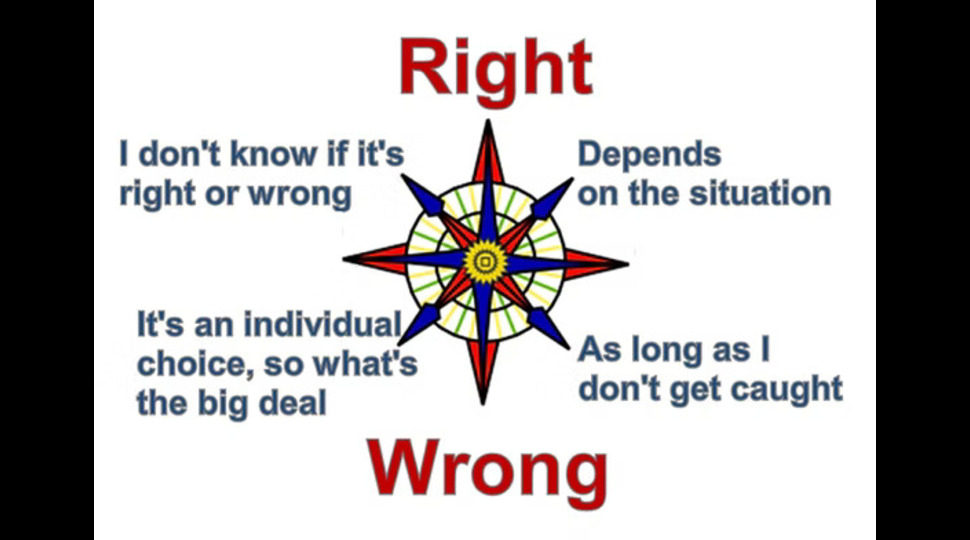
And yet, to be honest, the more I look at the world around me, the more I fear that our society’s moral compass is not only confused, but warped. We show compassion toward animals, yet our laws and judgments often fail to defend the same respect for human life, revealing a selective and inconsistent understanding of justice.
Consider the tragic story of Moira. On the evening of 16th September 2016, she was crossing the street after pressing the traffic light button and waiting for cars to stop. Renald A., aged 20, recklessly sped at 100 km/h, striking Moira and flinging her across the door of a restaurant. Moira spent nine months in a hospital for rehabilitation, suffering brain trauma and 80% disability. She had to relearn even the simplest tasks, and her memory loss meant she needed reintroduction to family and friends. Her mother stayed by her side day after day, and Moira lost her career as a bank manager -- a career she had worked hard to achieve.
Nine years after the accident, Renald A., now 29, was sentenced to nine months in jail, banned from driving for three years, and fined €1,683. The magistrate explained that the sentence was long because Renald had shown little remorse and delayed admitting responsibility. I do not pretend to know all the legal details, nor do I wish to condemn anyone. Courts must weigh many factors that we do not see. Still, it troubled me. Why does the suffering of some lives seem to awaken such strong protection, while the suffering of others appears to receive less attention? Are we placing a higher value on cats than on the lives of humans?
Am I missing something?
The disparity between these two cases is not isolated. In California (USA), Governor Gavin Newsom signed Bill 867, making it illegal for veterinarians to declaw cats. The law bans “tendonectomy, onychectomy, or any type of claw removal on a feline,” viewing these procedures as cruel and unnecessary. This move was celebrated by animal-rights groups as a triumph of compassion and respect for animal welfare.
Just weeks earlier, however, the same Governor signed a law protecting access to essential reproductive care, shielding patients, healthcare providers, and lawyers from legal repercussions. Abortion remains legal in California up to around 23–24 weeks of pregnancy -- nearly six months of gestation, when fetal development is already very intricate.
These two laws, enacted within weeks of each other, highlight a paradox in how society measures compassion. On one hand, we take care to prevent harm to a cat, safeguarding its claws as if they were sacred; on the other hand, we defend the termination of a developing human life. As someone who values justice, I find myself struggling with these tensions.
Albert Schweitzer conceived his moral philosophy while working as both a theologian and a medical missionary in Africa. His notion of Reverence for Life holds that moral worth does not depend on a being's degree of beauty or usefulness. For him, every living creature carries the same mysterious drive to exist. “I am life that wills to live, in the midst of life that wills to live,” he wrote. This principle pushes us to widen compassion to all creation—but not at the expense of forgetting the human being.
The irony today is that while Schweitzer’s call to respect life is echoed by animal-rights activists, it is often detached from its original moral universality. The Reverence for Life ethic was never meant to divide compassion—to cherish one kind of life while disregarding another. Rather, Schweitzer sought a conscience that could hold the trembling bird and the suffering human in equal regard.
When moral priorities are reordered by emotion rather than reason, they easily become inverted. Our compassion risks turning sentimental—fierce in defending a cause that feels emotionally gratifying, yet blind to the silent suffering of others (who might not even be able to defend themselves).
Sometimes I worry that I am becoming cynical, losing trust in humanity's moral integrity. Witnessing the erosion of universal moral principles—values that were once self-evident, such as the inviolable dignity of every human life or the impartiality of justice—is unsettling. Instead, morality is becoming relative, depending on context, emotion or the feeling of a particular group.
And then what happens is that empathy becomes selective rather than universal: we can empathize with a declawed cat but remain indifferent to a human suffering under other circumstances, such as abortion or euthanasia. We can mourn the loss of a life in one context yet rationalize or minimize suffering in another.
British author C.S. Lewis warned precisely against this kind of moral erosion. In The Abolition of Man, he spoke of “men without chests”—people who know what is good but lack the moral strength to act on it. Lewis argued that when societies lose belief in objective right and wrong, our moral emotions no longer point outward toward truth but inward toward personal preference. Compassion becomes selective, directed only at those who elicit our feelings or fit our worldview. Lewis saw this as dangerous, for when feeling replaces principle, empathy becomes manipulable—shaped by media, ideology, or social trends.
Pope Francis has also reflected on these tensions. In a 5th March 2014 interview with Corriere della Sera, he questioned the phrase “non-negotiable values”: “I have never understood the expression non-negotiable values. Values are values, and that is it.” Francis, like Benedict XVI, emphasizes that no principle of the Church’s social teaching is inherently less important. There is no hierarchy between life issues and broader social issues. Francis reminds us that every human life has inviolable dignity and that moral concern cannot be selective. In Evangelii Gaudium, he writes: “Reason alone is sufficient to recognize the inviolable value of each human life. But if we also look from the standpoint of faith, every violation of personal dignity cries out to God and is an offence against the Creator of the individual.”
When I think again of my cats—Lulu, found wounded on Christmas Day 2016, a tiny kitten with a slashed neck; Dante, rescued from the clutches of a falcon; Lucy, adopted from a Los Angeles shelter, now slow but still dear to me—I know how natural it is to protect what is fragile. As the Dhammapada teaches: “All beings tremble before violence. All fear death. All love life.”
Yet these teachings challenge us to extend empathy consistently and not unevenly. When society protects cats more fiercely than human life itself, we cannot help but ask, with a certain sadness: Is there something wrong with us? What has happened to our sense of reverence for life?
Blurb
According to Albert Schweitzer, every living creature carries the same mysterious drive to exist. “I am life that wills to live, in the midst of life that wills to live,” he wrote.
Our compassion risks turning sentimental—fierce in defending a cause that feels emotionally gratifying, yet blind to the silent suffering of others.
When society protects cats more fiercely than human life itself, we cannot help but ask, with a certain sadness: Is there something wrong with us? What has happened to our sense of reverence for life?