Book Review
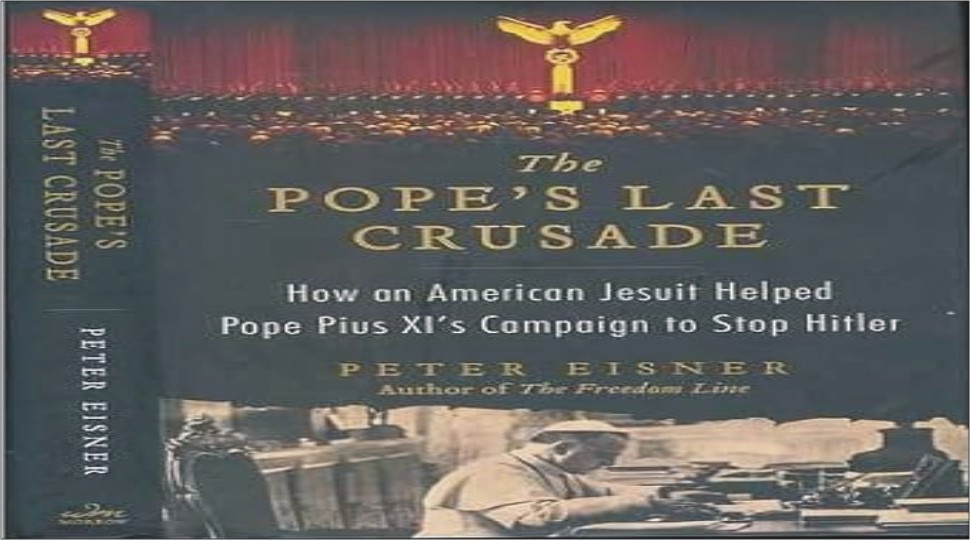
The Pope's Last Crusade:
This book explores the hitherto unknown complexities of one of the most severe crises faced by the Vatican when Adolf Hitler started to build his Nazi empire in the 1930s. Pope Pius XI was openly critical of the Nazi-Fascist ideologies, while Europe and the Church were deeply divided and confused. The author investigates the story of how Pius XI secretly engaged American Jesuit John La Farge to help draft an encyclical strongly condemning Nazism and its persecution of Jews, and how unexpected circumstances prevented its publication in 1939 while Europe was on the brink of World War II.
Drawing from Vatican archives, historical research and personal interviews, Eisner presents facts previously unknown to tell this gripping story that clarifies the mysteries surrounding Papal policies towards Nazism. After his graduation from Harvard, John La Farge joined the Jesuits and worked among the poor Afro-American communities. He became a fighter against racism in America.
He was a journalist and editor of the popular Jesuit magazine America. His book Racial Justice (1936) caught the Vatican’s attention. At this time, Hitler controlled Germany and was gearing up for the war. The coming holocaust and the war were signaled by the infamous Kristallnacht, creating a massive Jewish refugee crisis.
While the US, the UK, and France publicly condemned the violence and the League of Nations remained inactive, the ageing Pope Pius XI had already issued the encyclical Mit brennender Sorge (1937), criticizing the Nazi policies. The Pope summoned La Farge to draft an encyclical intended to condemn the Nazi racist doctrine unequivocally. The weight of the responsibility overwhelmed and humbled La Farge as he wrote. Secretly collaborating with Jesuit scholars like Gustav Gundlach, La Farge crafted the document. La Farge's superior, Fr. Wlodimir Ledochowski, controlled access to the Pope and was supported by Cardinal Eugenio Pacelli, who was to be the next Pope. Both were considered conservative members of the Vatican hierarchy.
Fear of Nazi-Fascist persecution and ideological confusion prevailed in the Vatican. Fearing Hitler’s reaction to the encyclical and the possible danger to the Church's institutional standing, along with their moderate if not sympathetic views of Nazism, the document was delayed from being delivered to the pontiff, who was increasingly ill. Pius XI died on February 10, 1939, a few months before the outbreak of World War II. Eugenio Pacelli was elected Pope on March 2 by a conclave lasting less than 24 hours. He assumed the name Pius XII. Pius XI’s proposed encyclical was suppressed and never published.
The author believes that the publication of the encyclical could have changed the course of World War II, instead of making it a story of lost opportunity and a “spiritual and political battle”. It could also have forestalled a lot of unjust criticism that the Church had to face in the Post-War era.
Ranks and Rosaries: A Soldier’s Journey from Battlefield to Battle Within
Brigadier O. A. James
This is the memoir of a distinguished Military officer of the Indian Army, describing his life and military career. Brig O A James takes us through his childhood, professional life, and life after retirement from the military. Beginning with his family history and his choice of a career, he goes on to chart the highs and lows of his life and career; he describes how his faith and his relationships -- especially his family -- shaped him. As he narrates his story, we are given unforgettable life lessons he learned as a servant of the nation, a committed husband, father, friend and a leader of men. Some of these stories are humorous as well.
His life experiences demonstrate the power of faith during adversity, highlighting the marriage of military leadership with spiritual resilience in the face of all adversity, as the title suggests. The book begins with the author recollecting and reflecting on his life after retirement, enjoying a holiday with his family on board a cruise ship in the Gulf of Mexico on his 70th birthday. He believes that his life journey and the various assignments he undertook during his military career followed a divine plan. He pays special tribute to his wife Marykutty as “one of the most striking threads in the tapestry of life.”
He begins recalling the history of his family, especially his father, who was a hardworking, devout man whose values, social commitment and personal integrity influenced his formative years, along with the teachers in school and college. His decision to pursue a military career was a turning point. His brilliance and ambition, coupled with hard work, took him through the tests and landed him in the Indian Military Academy, Dehradun, in 1971.
After training in the engineering section, his service took him to various frontiers of the military services -- the Electronics and Mechanical Engineering units in Uttarakhand, Assam, Arunachal Pradesh, Allahabad, and Sikkim; he commanded a Battalion in Punjab as a Colonel; he had also worked in challenging high-altitude terrains in Kashmir. He was also trained in Sweden and Norway on electronic equipment.
He also played a crucial role in the Officers’ selection at the Services Selection Board, Bhopal. Towards the end of his career, he returned to Kerala to head the National Cadet Corps (NCC). After retirement, he was engaged in social activities, relief work during the Covid pandemic and the floods of 2008 in his hometown.
The highlight of the book is his narrative about his fight with cancer, which he faced heroically, with the rosary as his weapon. In the ‘Epilogue’ and the Afterword, he inspires us with his acquired wisdom and guidance for the young. The book has been translated into Hindi, Malayalam and Spanish.
This book explores the hitherto unknown complexities of one of the most severe crises faced by the Vatican when Adolf Hitler started to build his Nazi empire in the 1930s. Pope Pius XI was openly critical of the Nazi-Fascist ideologies, while Europe and the Church were deeply divided and confused. The author investigates the story of how Pius XI secretly engaged American Jesuit John La Farge to help draft an encyclical strongly condemning Nazism and its persecution of Jews, and how unexpected circumstances prevented its publication in 1939 while Europe was on the brink of World War II.
Drawing from Vatican archives, historical research and personal interviews, Eisner presents facts previously unknown to tell this gripping story that clarifies the mysteries surrounding Papal policies towards Nazism. After his graduation from Harvard, John La Farge joined the Jesuits and worked among the poor Afro-American communities. He became a fighter against racism in America.
He was a journalist and editor of the popular Jesuit magazine America. His book Racial Justice (1936) caught the Vatican’s attention. At this time, Hitler controlled Germany and was gearing up for the war. The coming holocaust and the war were signaled by the infamous Kristallnacht, creating a massive Jewish refugee crisis.
While the US, the UK, and France publicly condemned the violence and the League of Nations remained inactive, the ageing Pope Pius XI had already issued the encyclical Mit brennender Sorge (1937), criticizing the Nazi policies. The Pope summoned La Farge to draft an encyclical intended to condemn the Nazi racist doctrine unequivocally. The weight of the responsibility overwhelmed and humbled La Farge as he wrote. Secretly collaborating with Jesuit scholars like Gustav Gundlach, La Farge crafted the document. La Farge's superior, Fr. Wlodimir Ledochowski, controlled access to the Pope and was supported by Cardinal Eugenio Pacelli, who was to be the next Pope. Both were considered conservative members of the Vatican hierarchy.
Fear of Nazi-Fascist persecution and ideological confusion prevailed in the Vatican. Fearing Hitler’s reaction to the encyclical and the possible danger to the Church's institutional standing, along with their moderate if not sympathetic views of Nazism, the document was delayed from being delivered to the pontiff, who was increasingly ill. Pius XI died on February 10, 1939, a few months before the outbreak of World War II. Eugenio Pacelli was elected Pope on March 2 by a conclave lasting less than 24 hours. He assumed the name Pius XII. Pius XI’s proposed encyclical was suppressed and never published.
The author believes that the publication of the encyclical could have changed the course of World War II, instead of making it a story of lost opportunity and a “spiritual and political battle”. It could also have forestalled a lot of unjust criticism that the Church had to face in the Post-War era.
Ranks and Rosaries: A Soldier’s Journey from Battlefield to Battle Within
Brigadier O. A. James
This is the memoir of a distinguished Military officer of the Indian Army, describing his life and military career. Brig O A James takes us through his childhood, professional life, and life after retirement from the military. Beginning with his family history and his choice of a career, he goes on to chart the highs and lows of his life and career; he describes how his faith and his relationships -- especially his family -- shaped him. As he narrates his story, we are given unforgettable life lessons he learned as a servant of the nation, a committed husband, father, friend and a leader of men. Some of these stories are humorous as well.
His life experiences demonstrate the power of faith during adversity, highlighting the marriage of military leadership with spiritual resilience in the face of all adversity, as the title suggests. The book begins with the author recollecting and reflecting on his life after retirement, enjoying a holiday with his family on board a cruise ship in the Gulf of Mexico on his 70th birthday. He believes that his life journey and the various assignments he undertook during his military career followed a divine plan. He pays special tribute to his wife Marykutty as “one of the most striking threads in the tapestry of life.”
He begins recalling the history of his family, especially his father, who was a hardworking, devout man whose values, social commitment and personal integrity influenced his formative years, along with the teachers in school and college. His decision to pursue a military career was a turning point. His brilliance and ambition, coupled with hard work, took him through the tests and landed him in the Indian Military Academy, Dehradun, in 1971.
After training in the engineering section, his service took him to various frontiers of the military services -- the Electronics and Mechanical Engineering units in Uttarakhand, Assam, Arunachal Pradesh, Allahabad, and Sikkim; he commanded a Battalion in Punjab as a Colonel; he had also worked in challenging high-altitude terrains in Kashmir. He was also trained in Sweden and Norway on electronic equipment.
He also played a crucial role in the Officers’ selection at the Services Selection Board, Bhopal. Towards the end of his career, he returned to Kerala to head the National Cadet Corps (NCC). After retirement, he was engaged in social activities, relief work during the Covid pandemic and the floods of 2008 in his hometown.
The highlight of the book is his narrative about his fight with cancer, which he faced heroically, with the rosary as his weapon. In the ‘Epilogue’ and the Afterword, he inspires us with his acquired wisdom and guidance for the young. The book has been translated into Hindi, Malayalam and Spanish.