Cover Story
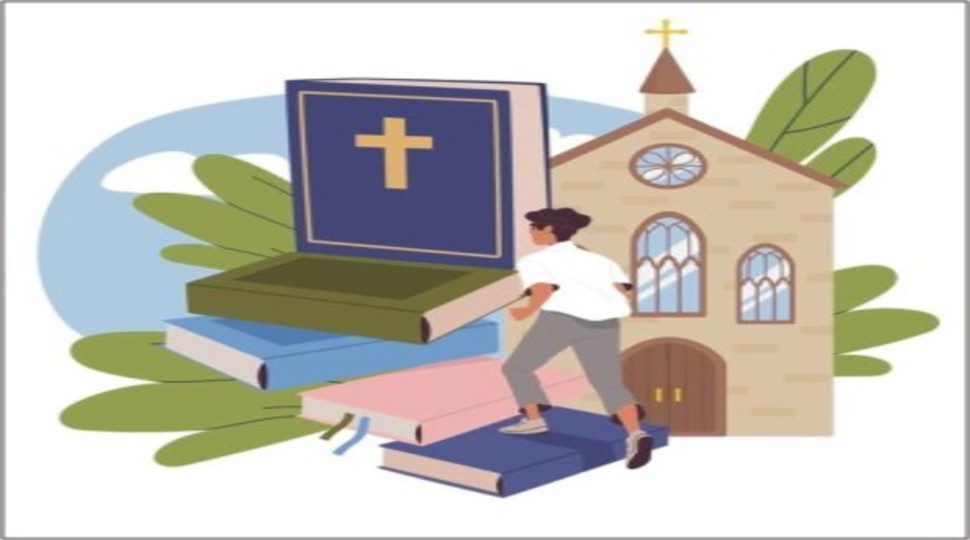
A New Road Map for Catholic Education
On the 60th anniversary of Gravissimum Educationis, Pope Leo XIV’s Apostolic Letter “Drawing New Maps of Hope” renews the Church’s commitment to education as a ministry of hope, justice, and evangelization. The Pope reminds us that education is not a peripheral activity of the Church but a sacred mission, “the concrete way in which the Gospel becomes an educational gesture, a relationship, a culture.”
In a world facing fragmentation, digital manipulation, ecological destruction, hatred and violence, and moral confusion, Catholic education is called to be prophetic: to form hearts and minds that love truth, live in fraternity, and serve the common good. Catholic education must be central to the Church’s mission. Amid a fragmented and digitalized world, Catholic education must remain a beacon that bridges divides, nurtures meaning, and transforms the Gospel into culture promoting life.
The Pope traces the Church’s educational history, from the desert fathers, monastic schools, and medieval universities to great educators like St. Joseph Calasanz, St. John Baptist de La Salle, and many other saints. Education, he insists, is “flesh, passion, and history,” rooted in service to the poor and excluded.
True education, according to the Pope, is a communal act — a “we” that includes families, teachers, students, and society. The heart must accompany reason; dialogue, empathy, and freedom in truth are central. Faith and intellect should work together to form persons of integrity and service.
Gravissimum Educationis was a great land mark for Catholic education all over the world. The 1965 Declaration remains a guiding star: education is a universal right and must serve the integral growth of the human person. The Pope warns against reducing education to mere technical or economic utility and calls for pedagogy grounded in dignity, justice, and the common good. According to late Pope Francis, the centre of education is human person. The same is underlined by Pope Leo too. Placing the person at the centre means nurturing virtue, and responsibility. Teachers’ formation at all levels: intellectual, pedagogical, and spiritual; and parents remain the primary educators, in collaboration with schools and the Church. Therefore, family must be cared for.
Catholic education must respect cultural diversity, uphold subsidiarity, and integrate faith with reason. It should be holistic — forming intellect, conscience, and social responsibility — and should avoid compartmentalization or reductionism. Education must also lead to contemplation and care of creation, linking environmental and social justice. Pope Leo urges ecological literacy rooted in spirituality, solidarity with the poor, and peaceful, “unarmed” approaches to life.
Catholic educational institutions — schools, universities, and movements — form a “constellation” united by mission and diversity. Collaboration, global exchanges, and shared responsibility are necessary to respond to new challenges. Digital technologies and AI must serve human dignity and not replace human relationships. The Pope calls for discernment, creativity, and theological reflection in digital education — placing persons before algorithms.
He reaffirms Pope Francis’ Global Compact on Education with its seven commitments: person-centeredness, importance to the perspectives of children and young people, involvement of girls and young women, dignity, family, ecology, and fraternity, and adds three new priorities:
- Formation of the inner life
- Ethical and human-centered use of technology
- Education for peace and reconciliation.
Finally, the Pope invites all educators to become “choreographers of hope,” to disarm words, raise their eyes toward new horizons, and safeguard the heart of education — the human person. Catholic schools and universities must be laboratories of discernment, innovation, and love that shine as “lights in the world.”
Implications of Pope’s Apostolic Letter
Pope Leo XIV reaffirms that Catholic education must:
- Place the human person at the centre -- educating in dignity, compassion, and moral freedom.
- Unite faith and reason, knowledge and justice, and truth and love.
- Form educational communities where teachers, parents, and students grow together in dialogue.
- Respond creatively to the challenges of digital culture, inequality, and ecological crisis.
- Promote a global educational compact based on fraternity, inclusion, and care for creation.
- He calls educators to become “choreographers of hope,” capable of shaping new paths of meaning, peace, and social transformation through education.
India’s pluralistic, diverse, and often polarized context presents unique challenges and opportunities for Catholic schools and universities. The Apostolic Letter invites us to rethink Catholic education in the light of our national reality. Here I identify the following areas of urgent attention of Catholic education and Educators of India.
Formation of the Whole Person
Indian Catholic schools must form integral human beings, not only academically successful but spiritually grounded, ethically responsible, and socially conscious. Education must move beyond rote learning to wisdom, discernment, and compassion.
Faith and Culture in Dialogue
In a multi-religious society, Catholic education must be a dialogue of faith and culture. Respect for other religions, openness to truth, and fostering harmony must be key features. Schools should become “bridges, not walls” where inclusiveness and fraternity are visibly practiced. All the more it is imperative today where hatred is spread by organised groups, and fanatic political parties.
Preferential Option for the Poor
Echoing Pope Leo’s insistence that “education of the poor is a duty, not a favour,” Catholic institutions in India must recommit to serving marginalized communities -- Dalits, tribals, migrants, and the economically disadvantaged -- through scholarships, accessible schooling, and community outreach.
Prophetic Role
In a climate where communal hatred, divisions, violence, consumerism, and political ideologies threaten the dignity of persons, Catholic educators are called to witness truth courageously and form young people who think critically and act justly. Schools must cultivate peace, justice, and civic responsibility as core values.
Digital, Ecological Responsibility
Technology must serve humanity, not replace it. Catholic schools in India should integrate digital ethics, ecological awareness, and sustainable lifestyles into their curriculum. This aligns with both the Laudato Si vision and India’s growing environmental needs.
Catholic Schools need reforms
To embody this renewed vision, Catholic schools and educators must undertake concrete reforms at structural, pedagogical, and spiritual levels:
- Renew Educational Mission Statements: Revisit institutional charters to align with the Gospel vision of hope, inclusion, and ecological responsibility. Every school should have a clear Catholic identity policy rooted in service and fraternity.
- Holistic Teacher Formation: Teachers are the heart of Catholic education. Ongoing formation in spirituality, pedagogy, social analysis, and interfaith dialogue must be integral. Training must also include understanding NEP 2020’s focus on equity, inclusion, and holistic education.
- Faith-Inspired Pedagogy: Move from a content-driven to a values-driven curriculum. Integrate moral education, peace studies, human rights, and social justice across subjects. Encourage experiential learning through service and community immersion.
- Inclusive and Equitable Practices: Create systems of support for first-generation learners, girls, rural students, and children with special needs. Inclusion must be lived as a faith conviction, not merely a social policy.
- Parent–School Partnership: Build stronger educational alliances with parents as primary educators through regular dialogue, joint formation sessions, and shared decision-making.
- Formation for Peace and Citizenship: Establish Peace Clubs, Eco-Clubs, and Social Justice Forums to engage students in active citizenship and compassionate leadership.
- Ecological and Digital Literacy: Incorporate sustainability projects, waste reduction, and digital ethics programs into the life of every institution.
Instilling Hope in Education
Hope is not optimism; it is a theological virtue that believes in renewal even amid darkness. Catholic educators must nurture hope by:
- Witnessing joy and faith in daily interactions.
- Encouraging students to see failure as part of growth.
- Promoting solidarity and service over competition.
- Building learning communities of compassion and mutual respect.
- Teaching prayer, silence, Examen, and discernment as sources of inner life.
To “draw new maps of hope” means forming young people who believe they can change their world through truth, faith, and love.
Action Plan for Catholic Schools and Educators
|
Focus Area |
Action Steps |
|
Identity & Mission |
Review mission statements; ensure school’s policies reflect Gospel values, inclusion, and service. |
|
Teacher Formation |
Organize annual spiritual-pedagogical retreats; workshops on Catholic Social Teaching, digital ethics, and NEP 2020. |
|
Curriculum Renewal |
Integrate peace, ecology, and social justice themes across subjects; include moral and inter-religious education. |
|
Inclusivity & equity |
Offer scholarships for marginalized groups; ensure gender equity; promote multilingual and multicultural sensitivity. |
|
Community Engagement |
Launch service-learning projects with local villages and NGOs. |
|
Ecological Action |
Implement “Green Campus” initiatives — tree planting, waste management, renewable energy use. |
|
Digital Stewardship |
Train teachers and students in responsible technology use and digital discernment. |
|
Spiritual Growth |
Establish spaces for prayer, reflection, and dialogue to nurture the inner life of both teachers and students. |
Conclusion
Pope Leo XIV’s “Drawing New Maps of Hope” invites Indian Catholic education to rediscover its prophetic and transformative mission. The task before us is not only to teach but to form to build bridges of understanding, protect creation, stand with the poor, and witness to hope in a divided world. Catholic educators in India are thus called to become servants of hope, builders of peace, and choreographers of a new humanity where every child, regardless of background, learns to believe: “All things can be made new.” (Rev 21:5) Let this be our goal.
(Sunny Jacob SJ is a renowned Educator, a former Assistant Secretary of Global Jesuit Education, (Rome), Former Coordinator of Educate Magis (Ireland). Currently he is the Director of UPASANA Renewal Centre, Jamshedpur. He can be contacted on sunnyjacobsj@gmail.com)
Blurbs
Pope reminds us that education is not a peripheral activity of the Church but a sacred mission, “the concrete way in which the Gospel becomes an educational gesture, a relationship, a culture.”
Schools should become “bridges, not walls” where inclusiveness and fraternity are visibly practiced. It is imperative today when hatred is spread by organised groups, and fanatic political parties.
The Pope warns against reducing education to mere technical or economic utility; he calls for pedagogy grounded in dignity, justice, and the common good. According to late Pope Francis, the centre of education is human person. The same is underlined by Pope Leo too.