Cover Story
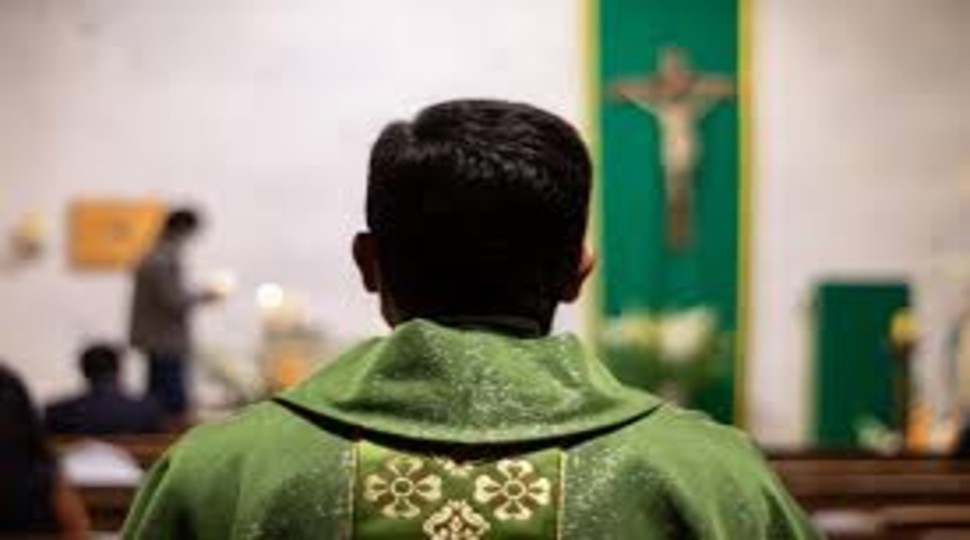
Sharing Joy and Fostering Hope
Vocation, vocation camps, and related news dominate conversations from March to June each year among clergy, religious communities, and many Catholic families across the country. There are ‘vocation camps’ at the diocesan centres and houses that belong to religious congregations. Several hundred young men and women attend these gatherings to learn more about what a vocation is, whether they have a call, and whether they should join a diocese or a religious congregation.
Obviously, if they hail from Catholic families that have been faithfully participating in the liturgy throughout the year, or if they studied at a Catholic school or college, they would have a fairly good idea of who the priests or religious are and what they do. Various types of literature, distributed by vocation promoters, often facilitate decision-making. At times, the youth will have a clear idea of where to join, while several others simply explore the options. In any case, summer is an exciting, sacred time in the lives of young men and women, when the Holy Spirit gently intervenes and inspires them to choose something unusual. Paraphrasing Robert Frost, we can say that these people take a road less travelled by and it makes all the difference.
The word vocation is applied to paths or ways of living. We understand better now that God calls people not only for clerical or religious lives but also for the sacrament of marriage or to be singles. Also, many confidently say they are called to be nurses or teachers or farmers or civil servants. This springs from a profound desire to be something and to do something which is meaningful and fulfilling. Some people do what they do with a great passion. Not everyone in the world chases wealth, but many across the globe would like to spend their lives pursuing worthwhile causes. In one way or another, God calls everyone, and people are restless until they discover the call and follow it wholeheartedly.
Changes and their impact on vocations
We can say that tectonic changes have occurred and continue to occur, impacting all spheres of life, including our spiritual and religious lives. Decades ago, having a priest or a religious in the family was considered to be a great blessing. At a time when they had several children, families were willing to offer or let go their sons and daughters to serve the Lord. Priests, Brothers, Religious Sisters, and Catechists actively encouraged youth to consider the priesthood as a religious vocation. The missionaries' stories inspired many young men and women to consider a life of service in India or overseas. Also, half a century ago, the options available to Catholic youth were not as diverse as they are now.
Changes in the family and society have a significant impact on vocations to the priestly and religious life. With fewer kids -- most families have one or two -- many Catholic families visualize a future for their children that is unrelated to serving the Lord in the Church, directly. Additionally, in the context of the scandals and the shared stories of priests and religious who struggle and suffer in their personal and community lives, families might be reluctant to send their sons and daughters to pursue this noble cause. Views and opinions about the life of a priest or a religious are not as uniform as it used to be.
The age at which one must be selected or chosen to pursue a vocation remains contested. There was a time when high school students were selected and placed in apostolic boarding homes, and eventually several of them joined the seminaries. Teenagers who aspire to be priests or religious are selected after completing high school or college and sent for studies. In the West, most who discern their vocations are older, age-wise. They spend longer time in studying the options, make retreats, and eventually decide.
Many students in India spend much less time choosing their vocation. At times, during a common vocation camp, students learn about the dioceses and diverse congregations, and after a day or two, they get to choose, be chosen, or be left out. Ideally, vocation promoters should be able to follow the aspiring students over a few years so that the young men or women get time to think about it, discuss and pray over. Parents and others (including parish priests and spiritual guides) could help in the discernment.
Contemporary challenges
On Holiness: For centuries, many in the Church inaccurately held that priests and religious are called to be exceptionally holy. While the faithful lived ‘in the world,’ the consecrated ones were expected to be away from the world, and, by default, live closer to God. Since most of the saints and martyrs also came from this clergy/religious flock, rather than from those who married or lived in families, the idea that holiness was not meant for them but for priests and religious was reinforced. The Second Vatican Council has redefined holiness and decreed that all the faithful are called to holiness. Holiness is for all.
For those discerning vocations, it is important to get this clear: that priests and religious are not called to be exclusively holy. They are invited to lead, guide, and animate the entire community to pursue holiness. The world is not a valley of tears but the sacred ground where God is active and working. As disciples, all are invited to spread the values of the Kingdom. As the recent popes, especially Pope Francis, said, either we go to heaven, along with others, or we don’t go at all. Ignoring and avoiding others, we don’t advance. Priests and religious have to help the faithful to walk on the path of holiness.
Family, a blessing, not a burden: Family plays an indispensable role in the lives of priests and religious and therefore it is crucial to reflect on it. Usually, families provide warmth and emotional support. They are happy to have someone who prays for them and someone to be proud of! At the same time, some families become sources of confusion and distraction. Like the mother of the sons of Zebedee, they come with expectations that cannot be fulfilled.
At times, some poor families send their sons and daughters to the priesthood or religious life so that at least they will have access to a better standard of life. Others simply plead or demand financial assistance. No doubt that exemplary vocations have come, and will come, from the families that have poor and modest backgrounds. Hence, those who are discerning vocations need to recall what Jesus said to James and John. It was a call to struggle and suffer and carry the cross. For those considering vocations, families should become a source of joy and support rather than a distraction or a burden.
Global and Synodal Church: By now, most of us have heard that there are more Catholics in Africa than in Europe. It simply shows that, as Karl Rahner said, the Catholic Church is finally becoming a global Church. At the same time, the Catholic Church is also emerging as a Synodal Church. The Synodal Church invites all baptized to understand their roles clearly. While priests and religious play their role, more responsibilities have to be shared with the laity. Those discerning vocations must be willing to listen and to learn.
It is still disheartening to see that some clergy and religious think that their only role is to teach. The ability to listen humbly and to learn are synodal gifts. The time is gone when the priest or sister was the most educated person in any area. Also, in future, more and more priests and religious will be challenged to work with and work under others, such as qualified and competent laity, and those discerning vocations must keep this in mind.
Saviour syndrome to Servant model: Knowingly or unknowingly, a section of priests and religious develop this saviour syndrome. They imagine themselves to be saviours and invariably carry a heavy burden, and wonder what will happen to the world if they don’t do what they plan to do. Fortunately, most of the committed priests and religious know that it is the Lord who saves us and that we are called to collaborate humbly with the Saviour. The Lord renews, transforms and saves the world, and we are called to be servants.
For the disciples, one of the most difficult things to understand was the concept of service. At the Last Supper, Jesus had to teach them, by washing their feet, the meaning of service and warned that unless they learned to serve, they would have no part in his mission. Priests and religious, and those planning to join their fold, must understand what true service is and whether they are willing to serve.
Being prophetic and be ready: Most Indians know the inspiring stories of Sister Rani Maria, Father Stan Swamy and others. More than being exclusively involved in the sacramental ministry or in institutions administered by dioceses or religious congregations, priests and religious are called to defend the poor and uphold their dignity and rights. It is not being political. Prior to and after Vatican II, Popes have been reminding that working for justice goes hand in hand with promoting faith. Those who wish to join seminaries or religious orders should reflect on this aspect.
Imitation of Jesus includes imitating Him who prophetically denounced evil. Also, the youth who desire to follow the Lord, as clergy or religious, need to keep in mind that India has changed dramatically and that religious fundamentalism is on the increase. Christians faced sufferings even in the past, but more attacks are reported now. Inequalities and injustices mark the lives of many poor Christians, and missionaries have to prepare themselves to stand with the little flocks.
Ultimately, vocation, a sincere desire to serve the Lord and the Lord’s people, is a mystery. There is no simple and human way to explain what it is. Jesus speaks to us through the Gospels and through the lives of saints, named and unrecognized. At times, the Holy Spirit ignites a holy desire in the hearts of the youth and empowers them to pursue this path. One does it, not for wealth or power or glory, but to walk in the footsteps of the disciples. When you hear the call, as it was first heard on the shores of Galilee, it becomes irresistible. Joy and peace that pervade the soul of the one who responds to the call are too profound to be unnoticed!
Blurbs
Changes in the family and society have a significant impact on vocations. With fewer children, many Catholic families visualize a future for their children outside religious life.
For those discerning vocations, it is important to know that priests and religious are not called to be exclusively holy. They are invited to lead and guide the entire community to pursue holiness.
Those who are discerning vocations need to recall what Jesus said to James and John. It was a call to struggle and suffer and carry the cross.